
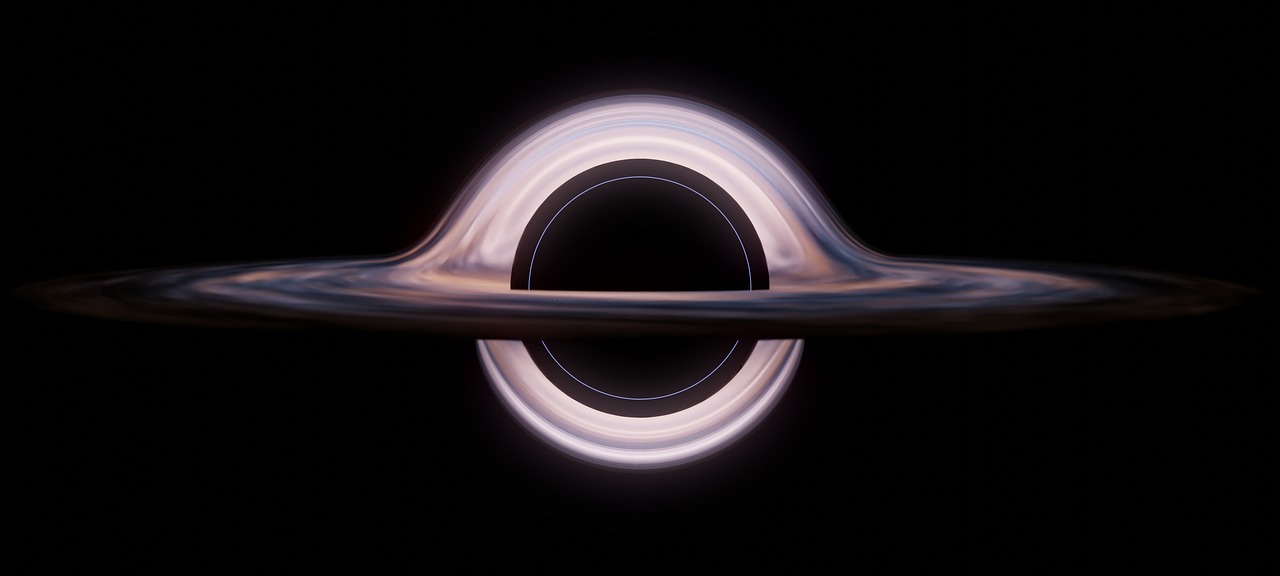
Black holes, the enigmatic cosmic entities that captivate our imagination and challenge our understanding of the universe, come in various forms, each with its own fascinating characteristics. In this cosmic odyssey, we embark on a journey to explore the depths of these celestial marvels and unravel their mysteries.
Understanding Black Holes
What are black holes? In essence they are a region of space where the gravitational pull is immense. So immense, that some supermassive black holes such as Sagittarius A* (At the centre of the milky way) can maintain galactic structures and the orbit of all the stars within a galaxy. At the heart of a black hole lies a singularity, a point of infinite density where the laws of physics break down and our conventional understanding of space and time ceases to apply. Surrounding the singularity is the event horizon, a boundary beyond which nothing, not even light, can escape the gravitational pull of the black hole. As matter spirals inexorably toward the singularity. It undergoes a process known as spaghettification, where tidal forces stretch and elongate it into thin, spaghetti-like strands.

Types of Black Holes
Black holes come in various types, but two are most common: stellar-mass black holes and supermassive black holes. Stellar-mass black holes are formed from the remnants of massive stars that have undergone gravitational collapse, while supermassive black holes lurk at the centers of galaxies. But did supermassive stars form these supermassive black holes? This question remains an enigma, with the answer not fully understood. However, theories suggest towards these formation mechanisms:
- Formation through the merger of numerous black holes.
- Direct collapse where dense gas clouds in the early universe collapsed directly into black holes instead of stars.
- Accretion is another theory where the black hole grows through the consumption of its surrounding stars and gases.
Nevertheless, the last two types of black holes are intermediate-mass black holes and miniature black holes. Although rarer, they are equally intriguing in their own right.
Detecting Black Holes
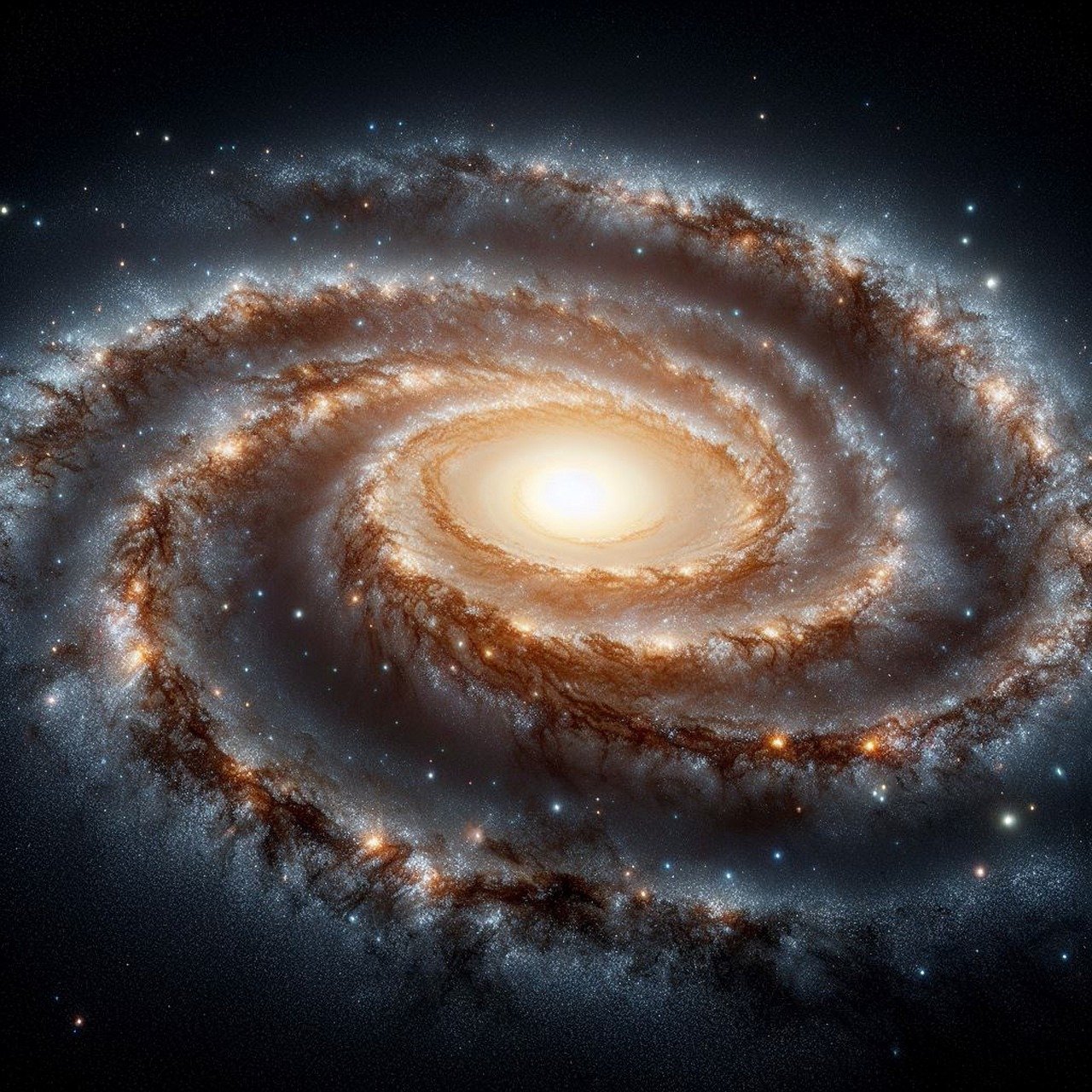
Despite being invisible, black holes betray their presence through their gravitational influence on nearby matter. One telltale sign is the presence of an accretion disk, a swirling disk of hot gas and dust that emits radiation as it spirals into the black hole. In some cases, this process gives rise to the spectacular phenomenon known as quasars, the brightest objects in the universe, which emanate jets of particles into the cosmos.
A Cinematic Tribute
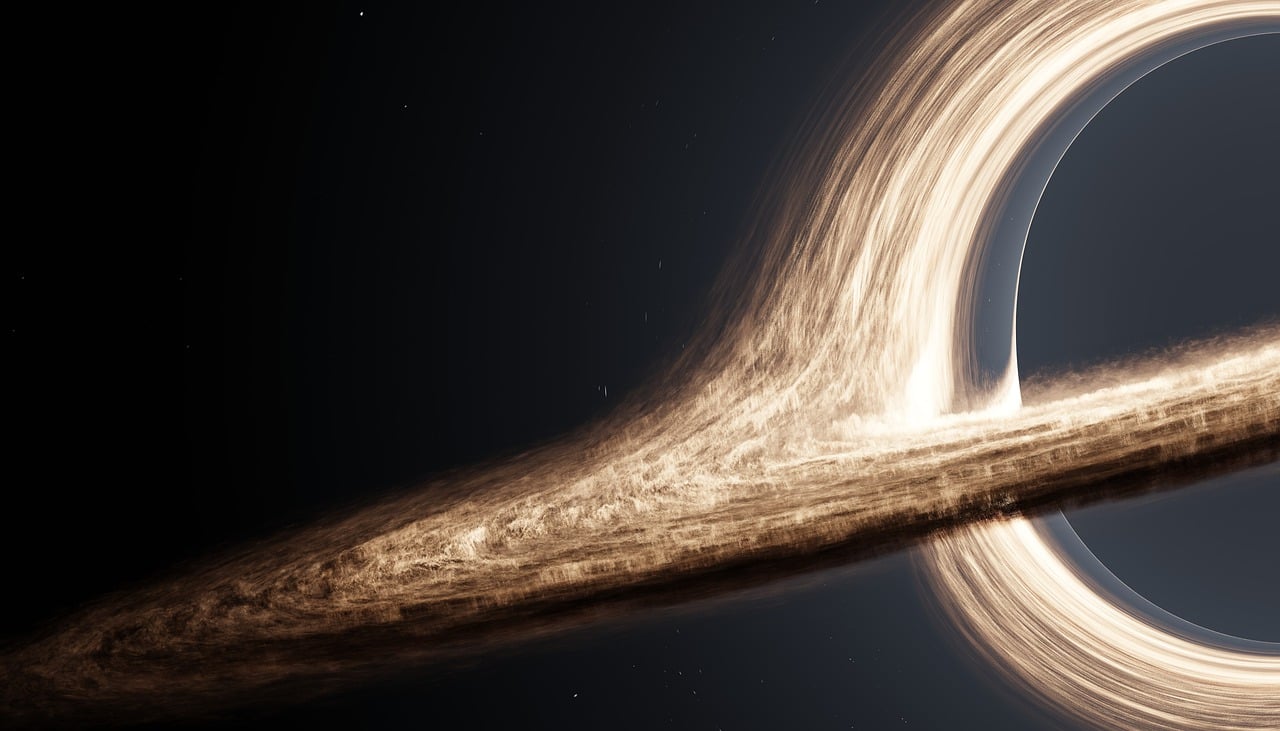
What inspired this post? Cassiotrio recently embarked on a cinematic journey to Cineworld to celebrate the 10th anniversary of the groundbreaking film “Interstellar.” Directed by Christopher Nolan, the film immerses viewers in the mesmerising visuals of a supermassive black hole named Gargantua, showcasing the effects of time dilation near the event horizon. However, time dilation is an intricate topic for an upcoming future post.
Galactic Monsters
As we peer into the depths of space and grapple with the mysteries of the cosmos, black holes stand as silent sentinels, challenging our understanding of the universe and inspiring awe and wonder in equal measure. I find it eerie knowing that every time I gaze up at our night sky, there are millions or even billions of these cosmic monsters in our galaxy, waiting to indiscriminately devour their next meal.
Keep your eyes on the skies.
Because you never know what might have their eyes on you.
Kairo,
Cassiotrio team