
The purpose of this blog post is to shed light on solar cycles, the sun’s fascinating behaviour, and the impact it has for us here on Earth.
The Sun’s 11-Year Cycle
The sun operates on a roughly 11-year cycle, during which its magnetic north and south poles switch places. This period of solar maximum, when solar activity peaks, can have various effects on our planet. Understanding these cycles helps us prepare for potential impact on technology, daily life and the observation opportunities.
What are solar cycles? Solar cycles are driven by the magnetic activity of the sun. Every 11 years, the sun’s magnetic field reverses, causing an increase in sunspots, solar flares, and coronal mass ejections (CMEs) which is further explained below. These changes are part of the sun’s natural rhythm and have been occurring for millions of years.
Potential Impacts of Solar Activity
Increased solar activity can lead to electric outages and long-term consequences for our electrical satellite infrastructure… Yes, depending on the intensity of the solar activity it could basically mean a technology blackout leaving you with no wifi or phone. Could you imagine the horror? Also, during peak solar activity, solar flares and CMEs can disrupt communications, damage satellites, and even impact power grids. One historic example of such an event is the Carrington Event of 1859.
The Carrington Event was a major coronal mass ejection that caused a geomagnetic storm. The ejection was so strong that it took less than a day to reach Earth in comparison to the average travel time of 1 to 3 days for CME’s. To put that into perspective, thats well over 3,000 kilometers per second. The auroras generated were so powerful that they could charge electrical devices simply by holding them up to the sky. Such events highlight the vulnerability of our modern electrical infrastructure to solar activity whilst also reminding us of the immense and underestimated power of Earths lightbulb.
Richard Carrington
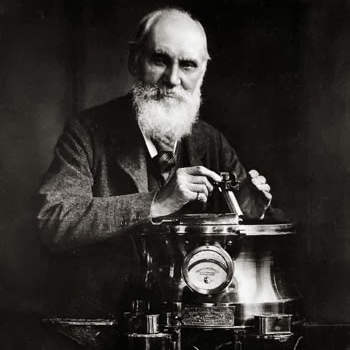
Richard Carrington, the astronomer who first observed the solar flare that led to the Carrington Event, made his discover from Red Hill, an area local to where Cassiotrio operates. Carrington’s pioneering work as an English astronomer has greatly developed solar physics and underscores the importance of observing solar activity. While Carrington’s private observatory may not have survived, his contributions to astronomy, particularly his work on solar observations and sunspots, continue to be highly regarded in the scientific community. His methodologies and discoveries laid the groundwork for modern solar physics where his legacy lives on through the continued study of solar activity and its impact on Earth.
Understanding Solar Activity
Understanding solar activity and its effects on Earth involves a combination of historical observations, modern technology, and advanced space missions. Here’s how we gather our knowledge:
Sunspots and Solar Cycles
Sunspots are dark regions on the sun’s surface, indicating areas of intense magnetic activity. By observing sunspots, scientists have learned about the 11-year solar cycle, during which the sun’s magnetic poles switch places. This cycle influences solar activity, including the frequency and intensity of solar flares and coronal mass ejections (CMEs).
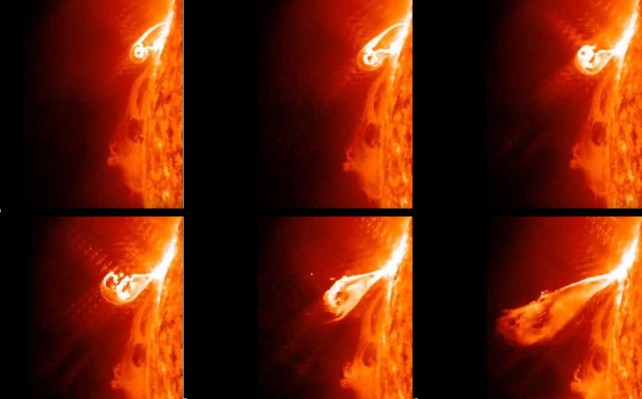
Sunspots can be visualised through images of sun bands, also known as flux ropes (More information below). These twisted magnetic fields can store enormous amounts of energy. When one of these bands snaps, it can cause a solar flare, which is often followed by a coronal mass ejection (CME). When a CME reaches Earth, it interacts with our planet’s magnetic field, causing charged particles to collide with atoms in the atmosphere. This interaction releases energy in the form of light, creating the beautiful displays known as the Aurora Borealis (Northern Lights) and Aurora Australis (Southern Lights).

The Parker Solar Probe
Launched by NASA in 2018, the Parker Solar Probe is designed to study the sun up close, providing unprecedented data on solar activity. It travels through the sun’s outer atmosphere, collecting information on magnetic fields, solar wind, and energetic particles. Whilst facing temperatures of up to 1,300 degrees celsius, the Parker probe helps us understand the mechanisms behind solar flares and CMEs, improving our ability to predict these events.
Coronal Mass Ejections (CMEs)
A CME is a significant release of plasma and magnetic field from the sun’s corona. These events can eject massive amounts of solar material into space, sometimes directed towards Earth. A notable example occurred in 2012, when a CME nearly hit Earth… Rings a bell? This CME might have been the catalyse to all the end of the world talk in 2012. Nevertheless, if it had hit Earth, it could have caused severe geomagnetic storms and widespread technological disruptions.
Formation and Release of a CME
- Magnetic Field Tension: The Sun’s corona is filled with magnetic field lines that can become twisted and stressed. These magnetic fields originate from the solar interior and are associated with sunspots on the Sun’s surface.
- Magnetic Flux Ropes: Over time, magnetic energy can build up in structures known as magnetic flux ropes. These are twisted bundles of magnetic field lines that contain a lot of stored energy and tension.
- Energy Build-up: The highest tension and energy in the magnetic field is typically located in these flux ropes (See above image), especially where the field lines are most twisted and complex. The energy builds up due to the continuous motion of the Sun’s surface, which can further twist and stress the magnetic field lines.
- Magnetic Reconnection: Eventually, the stress becomes too great, and magnetic reconnection occurs. This is a process where the magnetic field lines rapidly reconfigure and release their stored energy. Magnetic reconnection can happen in a very localised region, but it has global effects on the surrounding magnetic field.
- CME Burst: The reconnection event propels the magnetic flux rope and the surrounding coronal plasma outward, creating a CME (Last image above). This ejected material expands as it travels through space, forming the visible halo if it is directed towards or away from Earth.
Related topic: Faraday’s Law and Solar Impact
Faraday’s Law of Electromagnetic Induction is a fundamental principle that explains how a changing magnetic field can induce electric currents. When a solar flare or CME impacts Earth, it can alter our planet’s magnetic field, inducing currents in grounded electrical systems. This can lead to widespread electrical failures and disrupt technologies reliant on the electromagnetic spectrum, including the internet and satellite communications as previously mentioned.
Conclusion
Our understanding of the sun and it’s cycles comes from centuries of observation, advanced technologies, dedicated missions such as the parker solar probe and also tough love from the sun itself. While solar activity poses risks, ongoing research and monitoring help us prepare and mitigate potential impacts. By staying informed we can better appreciate and navigate the dynamic relationship between our planet and its star.
Clear Skies and stay curious,
Kairo
Cassiotrio Team