
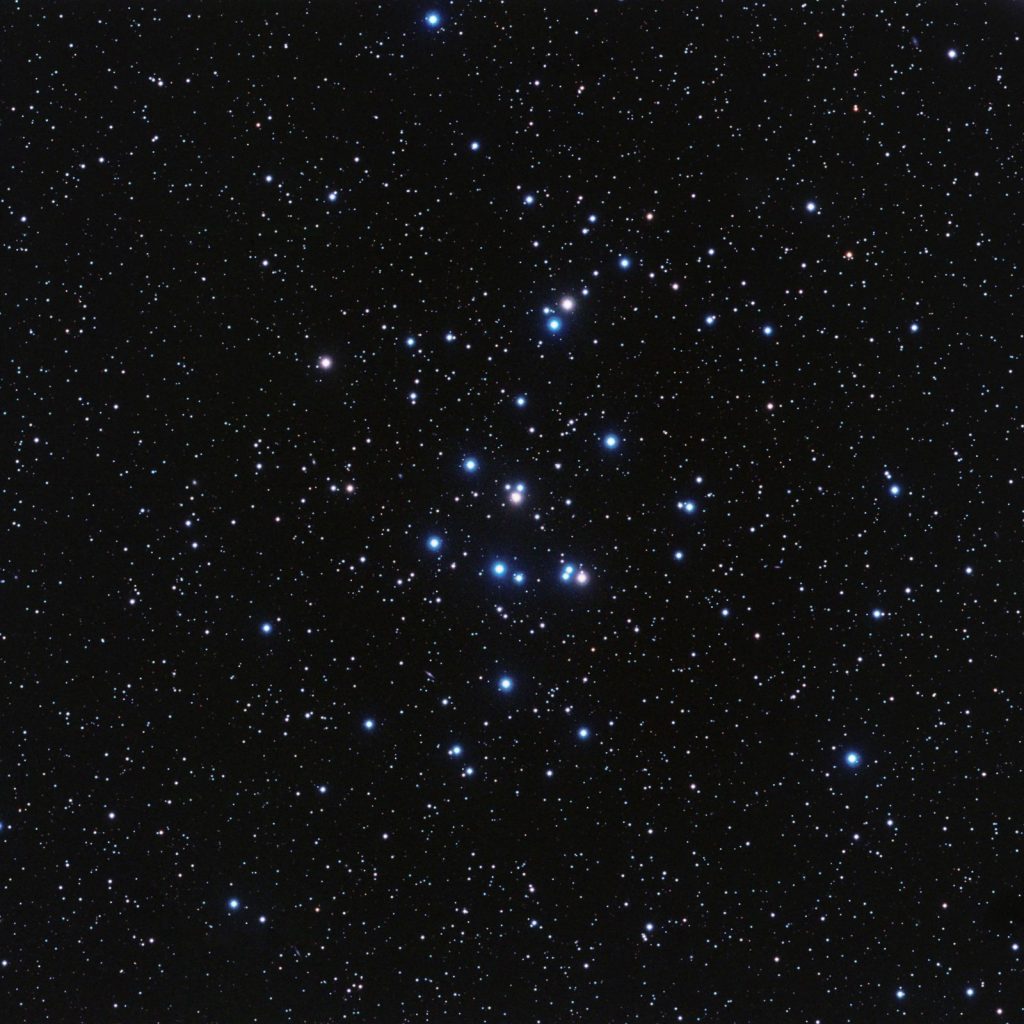
Hello everyone! Welcome to another exciting Cassiotrio blog post. In this post we’ll be sharing our recent experience of discovering the spectacular Beehive Cluster, using just a pair of humble binoculars.
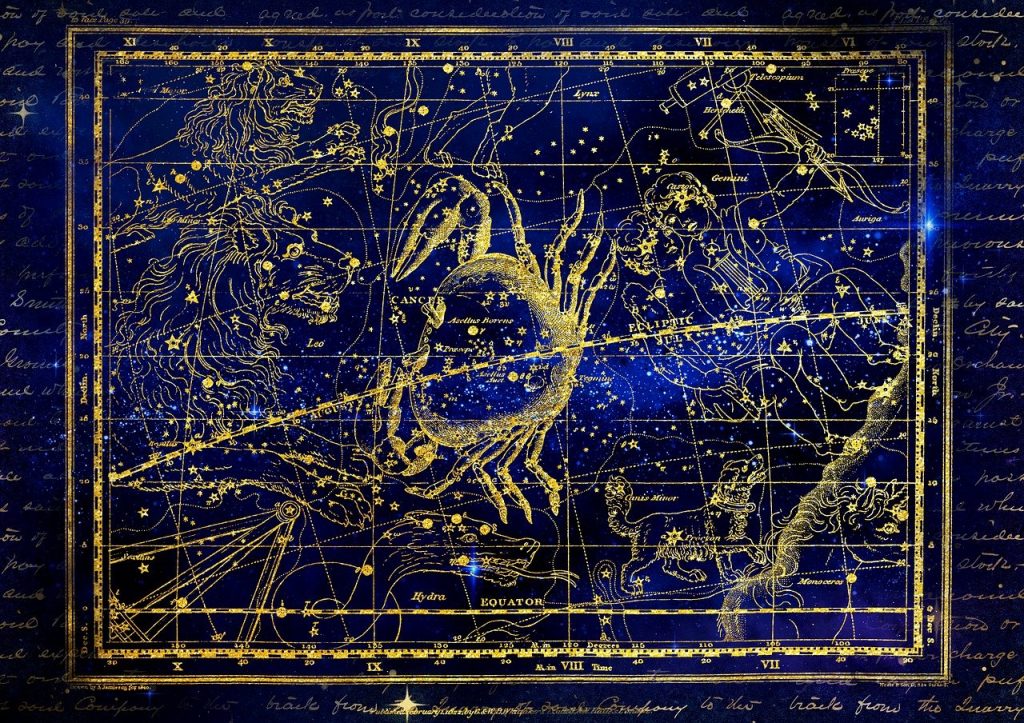
The Beehive Cluster, also known as ‘Praesepe’ or ‘Messier 44’ is an open cluster situated within the constellation of Cancer. It is one of the closer open clusters to Earth, and can even be seen as a blur of light to the naked eye. However, simply observing this blur of light through a pair of binoculars can unveil a swarm of stars, hence its name. With over 1000 stars loosely gravitationally bound to create the beehive cluster in the centre of Cancer, it is home to one of the largest population of stars in comparison to its neighbouring open clusters.
Quick Facts
– Location: Constellation Cancer
– Visibility: Apparent magnitude 3.7; visible to the naked eye under dark skies
– Distance: Approximately 577 light-years from Earth
– Size: Spans about 23 light-years
– Age: About 600 million years old
– Star Population: Contains around 1,000 stars
– Historical Significance: Known since ancient times; used as a weather indicator
– Catalog Listings: Also known as NGC 2632; “Praesepe” means “manger” in Latin
– Astronomical Research: Studied for stellar population and evolution
– Mythology: Linked to the donkey stars, Asellus Borealis and Asellus Australis
– Observation: Reveals more details and stars through telescopes and binoculars
Our experience
It was during Cassiotrio’s first venture to Bignor Hill, one of the darkest sky locations in the South Downs International Dark Sky Reserve, that we first discovered The Beehive Cluster. Weather conditions were ideal for taking in the breathtaking view of the glistening night sky with a new moon and very little cloud coverage.
After setting up our pitch and adjusting our eyes to the darkness, one of our team noticed a slight blur of light near the constellation of Cancer. After using a pair of binoculars to explore the enigma further, a dazzling display of tightly clustered stars were unveiled. Nevertheless, we remained unsure of what exactly it was that we had discovered, and opted to instead name it after our colleague who discovered it… until our later investigations revealed it to indeed be the famous Beehive Cluster!
Hence our experience of accidentally stumbling across such a magnificent celestial wonder not only demonstrates how easy it is to locate the Beehive Cluster, but also highlights the endless array of astronomical marvels waiting to be discovered by you, so what are you waiting for!
Happy exploring,
Elisha
Cassiotrio Team